

Launch Sequencing and Pricing Strategy
Compare launch sequences, starting prices and review timing under conventional IRP and relevant MFN scenarios, including the revenue and patient-access implications of delays.
Global pricing dynamics
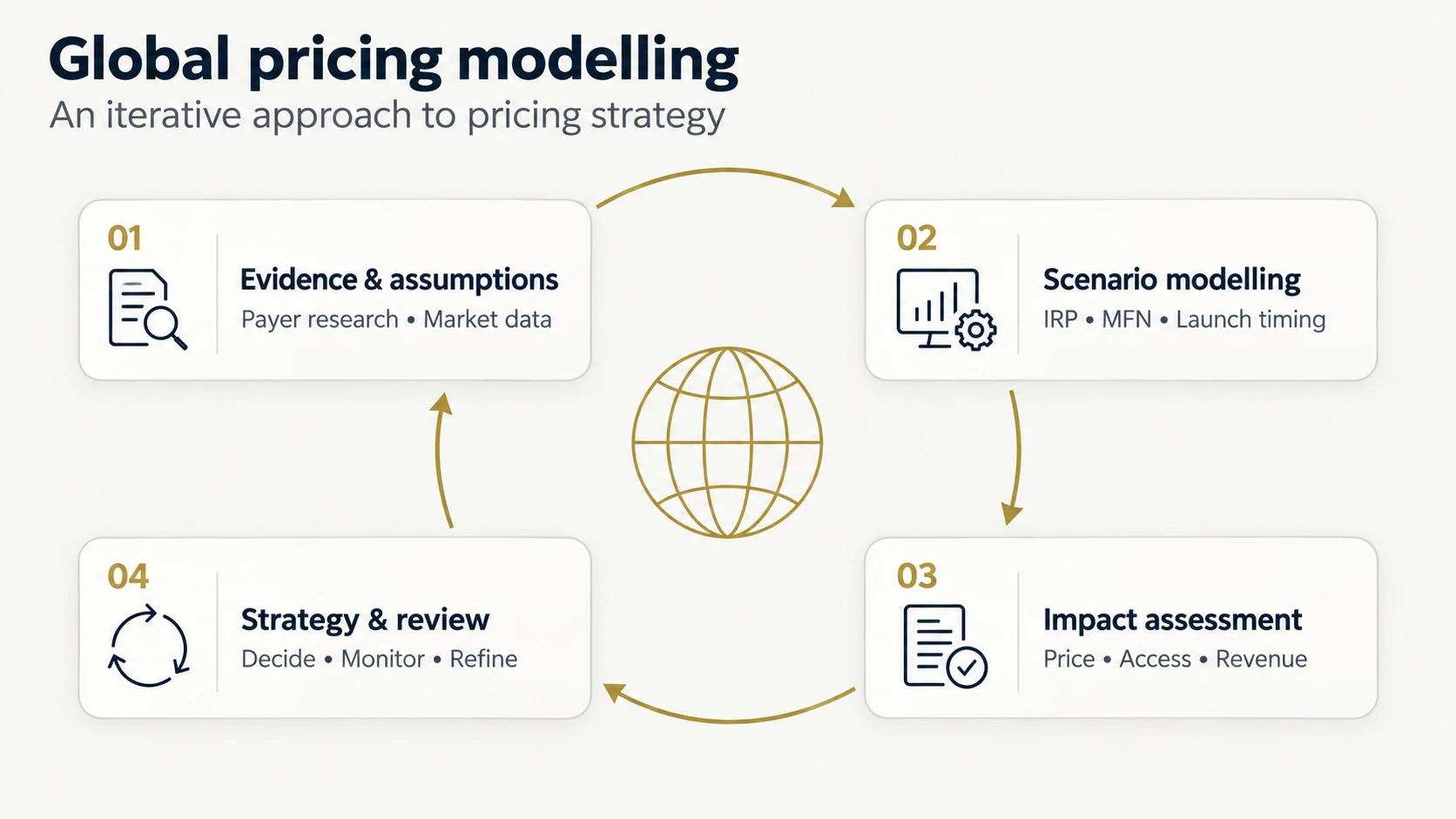
Local pricing and launch decisions can affect markets worldwide. GTC helps pharmaceutical teams assess these connections through International Reference Pricing (IRP), US Most-Favoured-Nation (MFN) scenarios and global revenue forecasts.
IRP uses international price comparisons to inform local pricing and reimbursement. US MFN approaches apply similar comparisons through evolving agreements and policy proposals, creating further connections between markets.
We model IRP rules and alternative MFN scenarios together, alongside launch timing and local access requirements, to assess portfolio impacts and compare pricing options across possible policy outcomes.
We combine pricing and market access expertise with bespoke modelling to assess exposure and compare strategies across the product lifecycle. Our analysis links country-level assumptions to global outcomes, accounting for data gaps, policy uncertainty and implementation constraints.

IRP, MFN and portfolio strategy
From a rapid competitor assessment to a full gross-to-net portfolio model, we build the analysis around the pricing decision you need to make.
MFN exposure depends on the products, channels, price definitions and timing relevant to each agreement or proposal. We test alternative MFN assumptions alongside established IRP rules, launch plans and local access requirements.
Each model makes its country rules, data sources and timing assumptions clear. Implemented arrangements, policy proposals and hypothetical scenarios are kept distinct, so teams can understand what drives the results and how they may change.
The scope can support a focused pricing review or ongoing strategic planning and revenue forecasting.
Read our MFN retrospectiveIdentify relevant reference markets, products and potential MFN connections.
Review list and net prices, data gaps and alternative policy outcomes.
Assess price evolution, launch sequencing and revenue impact under different scenarios.
Set out pricing and access trade-offs, practical options and the evidence needed to decide.
Dedicated pricing software
Alongside our global pricing modelling and consulting support, organisations looking for dedicated pharmaceutical pricing software can explore SyMAP from Symaptics. SyMAP is an AI-powered platform for International Reference Pricing, US MFN modelling and global pricing strategy.
A partnered approach
Pricing models need to reflect payer behaviour, local evidence and product-specific constraints. We combine scenario analysis with in-market knowledge and research, and revisit assumptions as decisions and policies evolve.
We help companies integrate global pricing modelling into strategic planning and forecasting, assessing how IRP, potential MFN outcomes and local market decisions affect the wider portfolio. Payer research informs the modelling assumptions, and the results help identify which pricing and access questions need further testing.
Across the product lifecycle
Compare launch sequences, starting prices and review timing under conventional IRP and relevant MFN scenarios, including the revenue and patient-access implications of delays.
Assess local price actions, competitor changes and portfolio exposure across linked markets, with sensitivities for list and net prices.
Entering into a price war with generics to maintain sales in one market could cause price and revenue erosion in others with no generic competition.
In practice
These projects show how global pricing modelling can support both long-term portfolio planning and an urgent response to a competitor's price change. Each combines analysis of pricing links between markets with the commercial questions facing the client.
Case study 01
A major pharmaceutical company relied on manual IRP assessments to understand how prices could change across markets. It needed a more consistent way to assess portfolio exposure and feed those changes into revenue forecasts. The model also had to integrate with its price management system and support strategic planning.
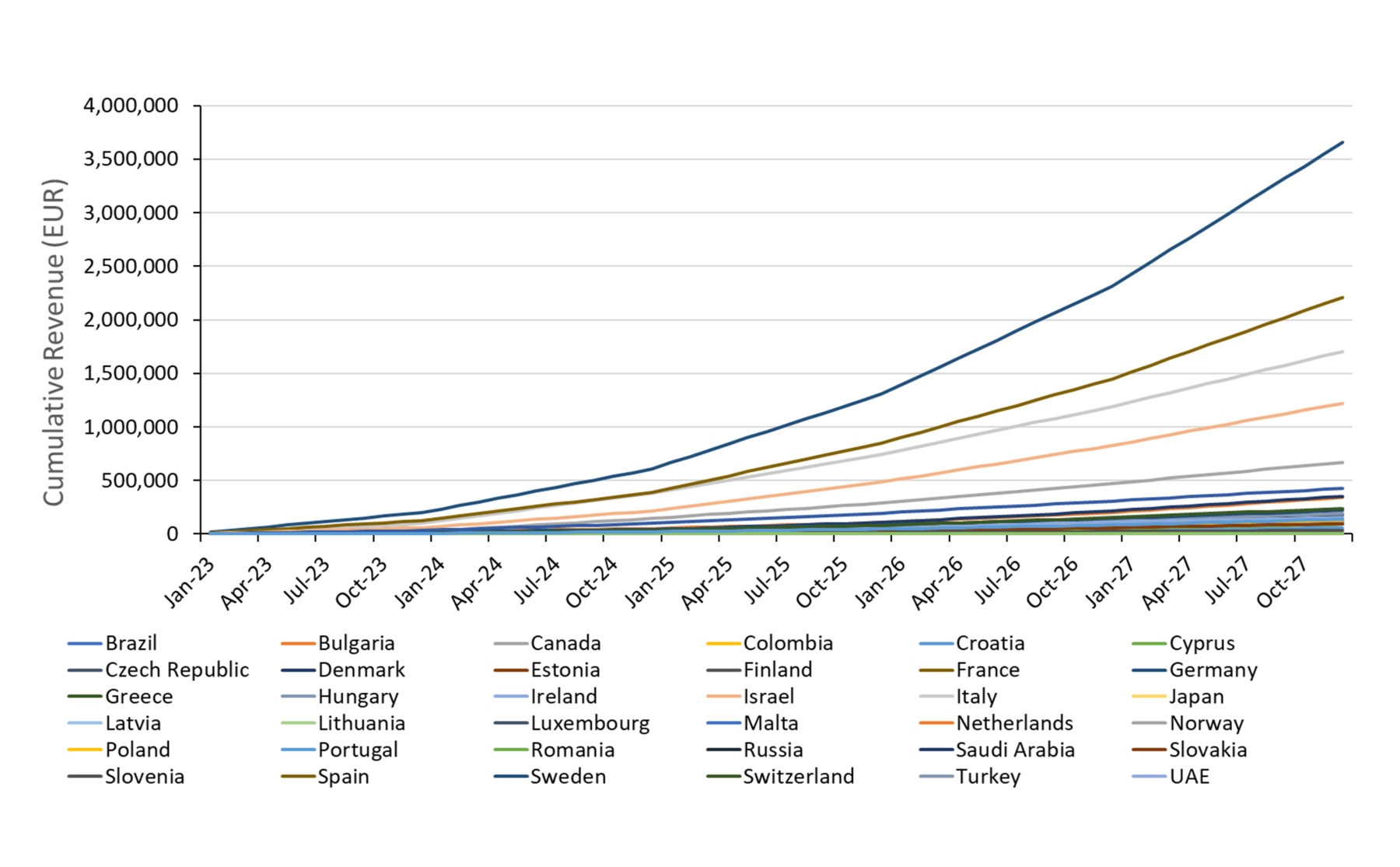
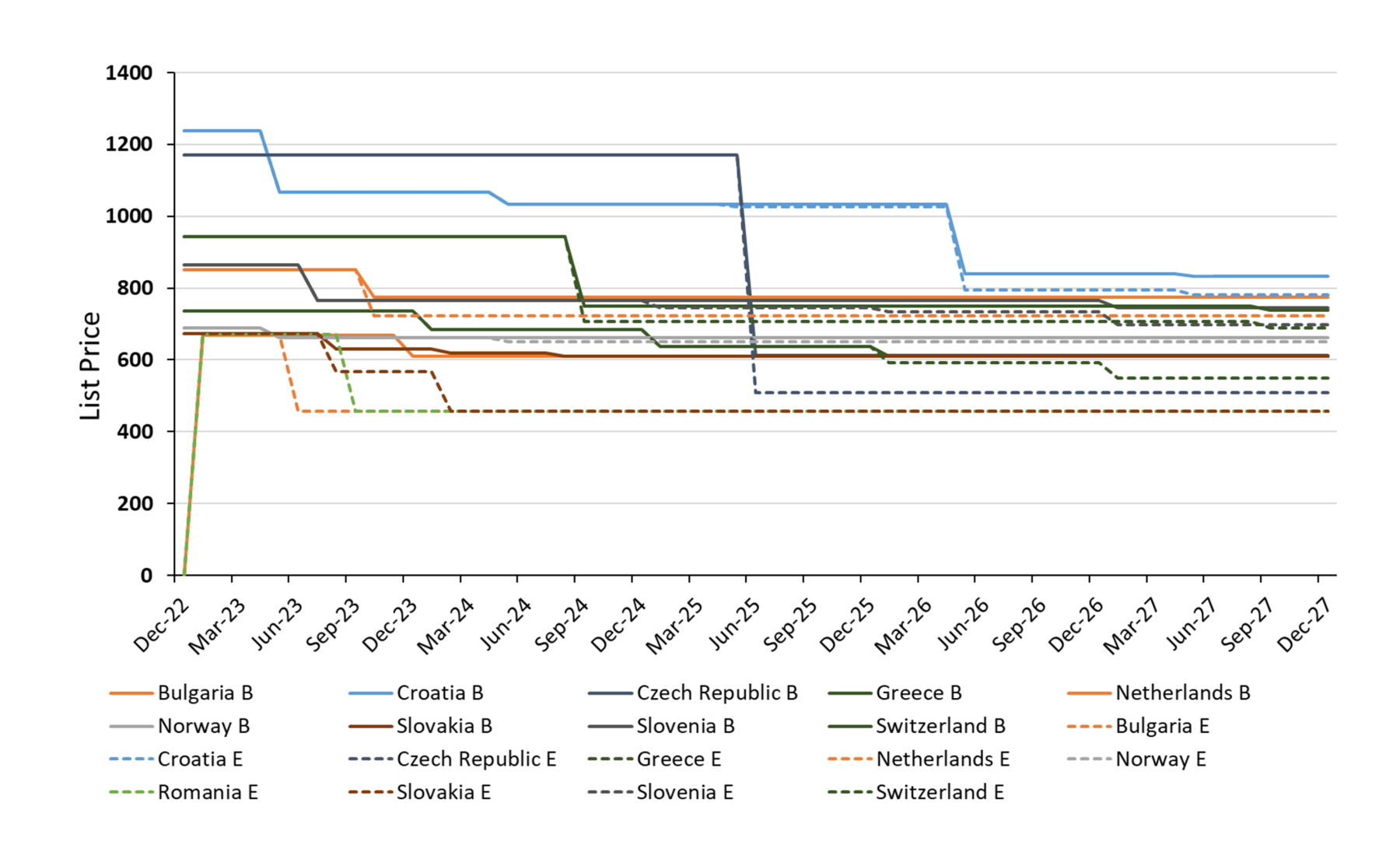
GTC built and implemented a portfolio-wide pricing model, connecting IRP rules with list and net price data, sales figures and cost of goods from internal and external systems. The model was designed to be updated as market conditions and assumptions changed.
The client could assess price evolution across markets over a five-year horizon and translate those changes into revenue forecasts, supporting decisions about global pricing strategy and portfolio planning.
Case study 02
An unexpected cut to a competitor's list price in one market raised questions about the consequences elsewhere. The client needed to understand how the change could spread through international reference pricing and what that might mean for its own product's pricing, market access and revenue potential.
GTC used its in-house pricing model to assess the competitor's potential price evolution across markets over the following five years. The analysis traced the initial price cut through IRP rules and identified markets where further reductions could follow.
Follow-up scenarios tested additional price changes and their implications for the client's pricing and revenue strategy. This gave the team a basis for assessing its options and planning its response as market conditions developed.
Related insight
US MFN pricing has moved from political ambition to deals and draft rules. What has changed, why Medicare timelines look uncertain, and what to model next.
Read insight